 alt Hacker News
Why some clothes shrink in the wash and how to unshrink them
Comments
It has been ages since I had clothes shrink on me. To the point that I had assumed something must have gotten better in modern dryers. Is that not the case?
Edit: Quickly searching, this appears to be the case? Specifically modern moisture sensing dryers that stop appropriately goes a long way to never having something shrink on you.
I have this problem with button down shirts. I buy one that fits me perfectly and then all of a sudden months later its too small in the sleeves. I wash them very carefully. Only cold water, and air dry. This helps somewhat but the problem seems to re-occur still. I'll try the delicate cycle on the washer, but it's incredibly frustrating.
Me and the wife have so many discussions about this :)
We have a lot of "shrinkage" in our house, that I am convinced is more due to both of us uhh "growing" rather than the clothes shrinking ;)
You can imagine, it's a delicate subject
There was a great custom order screen printing website blog where they documented their shrinkage testing. They made a pressure sensitive shirt form and then ran 30+ brands of shirts through a battery of tests, measuring fit after each washing.
I've heard reports that the newer heat pump clothes dryers are less prone to cause shrinking. In their default mode they act more like a dehumidifier than a heater. In theory you can wash more delicate dry-clean only garments as well.
I have the following printout in the laundry room. I haven't had any problems with shrinking or fading, etc.
https://www.ihateironing.com/blog/wp-content/uploads/2016/07...
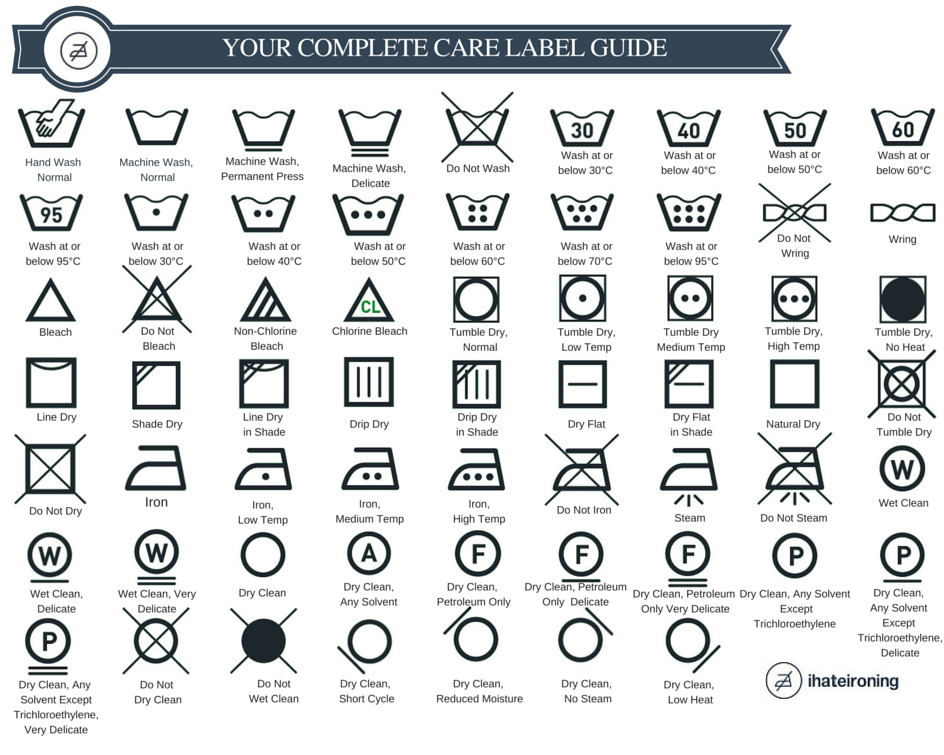
I am tall enough that shrinking t-shirts is a constant annoyance! (though I have to admit I haven't ever tried the 'conditioner and water' trick, even though I've heard of it before).
Low temperature washes and avoiding tumble dryers works. I've also noticed thicker material t-shirts seem to definitely shrink a lot less! Much thinner cottton t-shirts seem to shrink a lot more, my mental model is that there's less material so when it bunches together to it's "happy place", it ends up a lot smaller. I have no evidence for this though.
Any other tips from people here? Also, has anyone actually tried stretching with hair conditioner?
Growing up I was always told that cotton would shrink in the dryer but polyester wouldn't, and I should just check the tag on a shirt to find out if it would shrink (which usually would say something like 100% cotton, 100% polyester, 50% cotton/50% polyester, etc.). Seeing the title on this article made me think that it would be a refutation of that conventional wisdom, but it sounds like what I was taught growing up was basically correct.
I can't help but be curious now; is this something that other people my age (born in the early 90s) had heard when they were kids? Did people who grew up earlier than that hear it when they were kids, or did this idea maybe not reach mainstream status until a bit later (maybe my parents were relatively early in repeating this wisdom)? Or maybe it's something that used to be common knowledge that's been "lost" to newer generations for some reason? I'm genuinely a bit surprised to see that this article was published just last summer, since I assumed that the basic premise would be have something the average person would have learned before then from existing sources. Maybe I'm assuming too much about whether this article was intended to be about the "what" rather than the "why", but the language seems intended to be approachable to those from a non-scientific background (e.g. "on a chemical level, there are also links between the chains called hydrogen bonds"; I would expect someone talking to another scientist to be more direct and say something like "there are hydrogen bonds" with the expectation that they understood what they were already).
> Textile scientists and engineers are also working on fabrics that resist shrinkage through advanced material design. Among promising innovations are blended yarns that combine natural and synthetic fibres.
What odd language!
The fact that cotton-poly blends resist shrinking and wrinkling better than natural fibers has been known for like 80 years. While it may be that research continues, the "promising innovation" era of this category lapsed eons ago.
I'm also mystified why the article would not at least acknowledge the existence of something called pre-shrunk cotton, which is a material that is put through processes that cause shrinking before being measured and cut for clothing, to minimize further after-market shrinkage for the consumer.
Wow! Never thought I'd see my little Alma Mater on Hacker News!
Her logic seems reasonable but stating that the fibers "return to their original crinkled state" is missing the fact that the fiber go through the process of spinning to improve tensile strength (as well as the options of making an infinite yarn from finite fibers by twisting them together). regardless to return to original "crinckled state" they need to overcome those forces as well as the forces of the geometry of the knit(on a different scale).
BTW Rayon is also made from cellulose, cellulose II. While Cellulose I(natural) is metastable it can be converted by disolving in lye to a stable form (beta-gllocouse molecolue chain goes from being parallel to being anti parllel which increases the # of hydrogen bonds as well as helping create a more stable 3d structure) which again improve tensile strength and resist wrinkles on a different scale.
My eye hit the "It’s not just hot water – here’s why" as one of the first things... em-dash, here's why... I smell the smelly smell, even though I'm not even opposed to it haha.
I just buy bigger and wash at 95° once, then no problem.
I accidently mildly shrunk a wool sweater from using warm water instead of cold, and the unshrinking method in the article does not work very much.
Wow an article from my university in Melbourne (I am an old alumni), so proud!
Just buy them slightly oversize and let them shrink down to the right size.
Team no dryer. I have been cold wash + line-drying for my whole adult life; works out. (Unless something is actually soiled; then hot)
I had the opposite problem recently. Where Levi's jeans expanded and loosened up after a couple of washes. What's the reason for that?
i hang dry almost all my clothes. anything i care about. even $5 tshirts.
The Levi's logo now makes a lot more sense.
Bought some dress shirts (made of mostly cotton) from Banana Republic, the same brand that had good shirts some years back, the exact same size I wear.
Shockingly, after hand washing them for the first time in cold water, the sleeves have shrunk so dramatically that I cannot wear them any longer, except to roll up the sleeves Up to beyond the elbow.
They just lost customer for life. Enshittification strikes again.
Just a tip if you want to prevent shrinkage is to not dry clothes you don't want shrinking. I air dry my pants and any shirts I don't want to shrink.
Day 39585 of HN not knowing anything about selvedge denim, or other nice quality men’s fashion…
I have had some low temperature wool disasters. The spin cycle I think is to blame. But you want it dry, you think you'll get away with it, then you sigh deeply upon finding the shrinky dinky.
[dead]
[dead]
tl;dr; you can't, cause the fibers are crinckled up in a lower energy state, but try soaking in 1 tablespoon of hair conditioner per liter of lukewarm water and stretch.
I'm down to just a few sweat shirts and over shirts from the 80s, but they are hanging in there. Both the colors and the fabric. When the subject comes up with friends who ask about a particular shirt I joke, "The cotton was tougher back then". Recently, I've had jeans, shirts, and even socks that didn't make it through a single summer.
Is anyone else freaked out about cleaning their dryer's lint filter given all the new fabric materials? I'm putting together a dryer-vac system to keep it from billowing into the air of our small laundry room.