 alt Hacker News
Claude Code was released for general use in May 2025. It's only March.
Also using PyPI as a benchmark is incredibly myopic. Github's 2025 Octoverse[0] is more informative. In that report, you can see a clear inflection point in total users[1] and total open source contributions[2].
The report also notes:
> In 2025, 81.5% of contributions happened in private repositories, while 63% of all repositories were public
[0]: https://github.blog/news-insights/octoverse/octoverse-a-new-...
[1]: https://github.blog/wp-content/uploads/2025/10/octoverse-202...
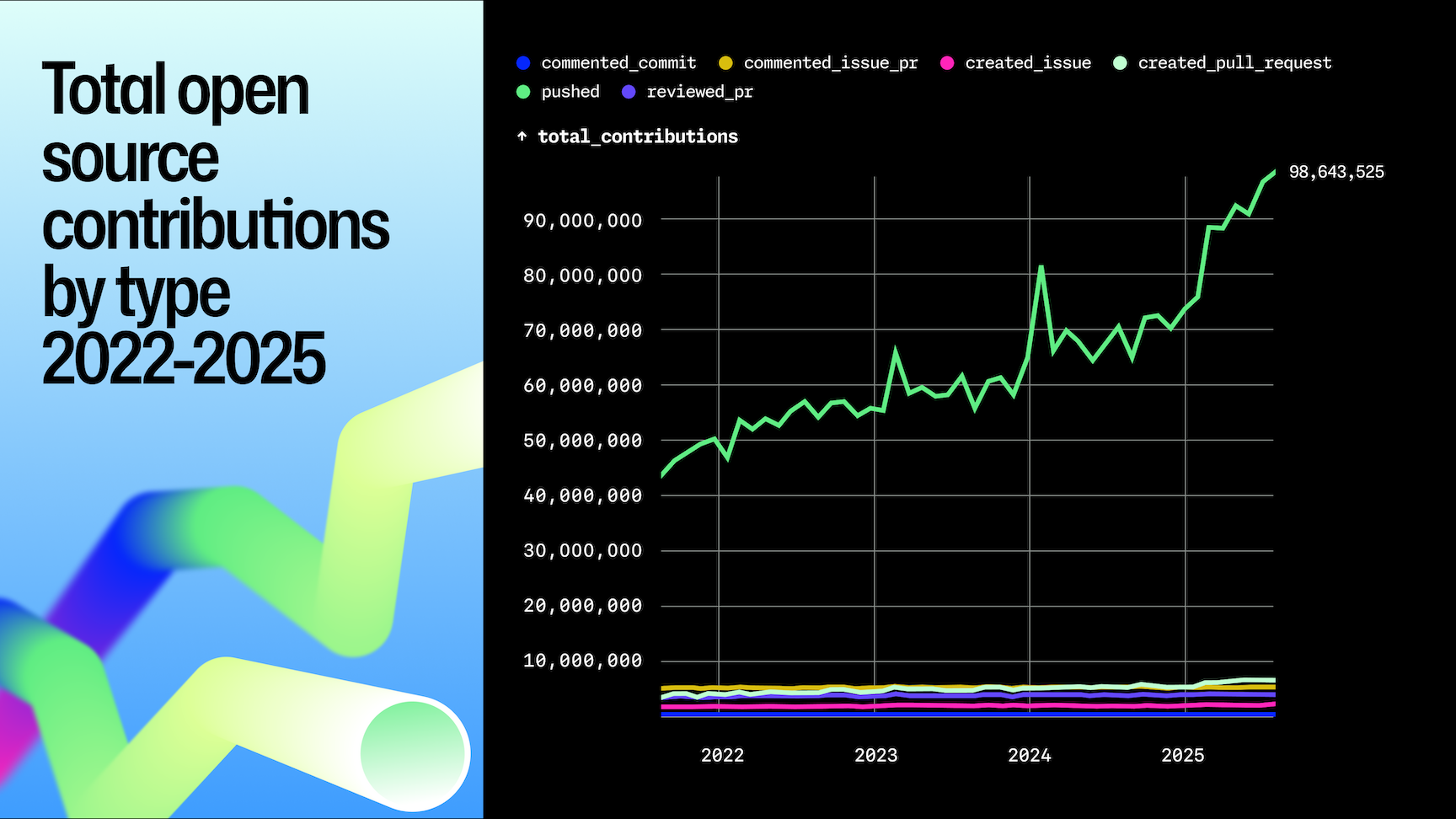
[2]: https://github.blog/wp-content/uploads/2025/10/octoverse-202...
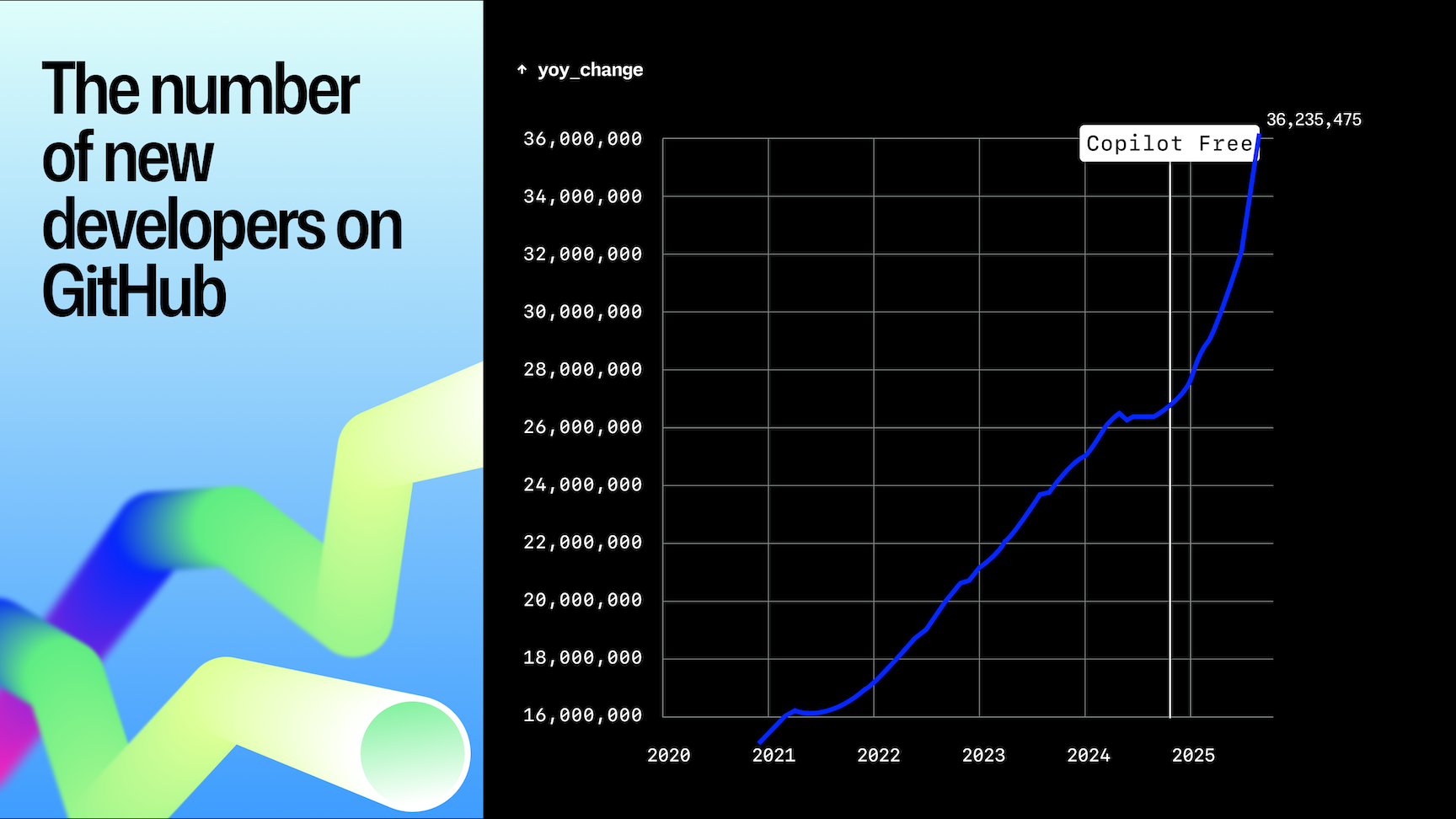
> Claude Code was released for general use in May 2025. It's only March.
Detractors of AI are often accused of moving the goalposts, but I think your comment is guilty of the same. Before Claude Code, we had Cursor, Github Copilot, and more. Each of these was purportedly revolutionizing software engineering.
Further, the core claim for AI coding is that it lets you ship code 10x or 100x faster. So why do we need to wait years to see the result? Shouldn't there be an explosion in every type of software imaginable?