alt Hacker News
And just to expand on why I reject the line of thought laid out in this article, let me share something from my own life as an illustrative example.
I'm working on a project, with a lot of help from ChatGPT, involving an "artificial neuron". That is, an electronic circuit, using a PUT, a capacitor, and some resistors, that simulates some of the behavior of a biological neuron. Specifically an "integrate and fire" model of neuron behavior. To that end, I'm running experiments by scripting my function generator to send signals to the circuit, and then capturing the inputs and outputs on my oscilloscope. Then I usually discuss the results with ChatGPT. In what follows, observe a couple of things:
1. The LLM "knows" the context of what we're talking about, even if I provide a prompt with no text at all, just an image.
2. It parses a moderately complex image, identifies the separate traces and what they represent, uses the time-base information displayed on screen, and the on-screen graticule, and works out "how many input pulses fire before an output pulse fires" and then reports back to me and gives an analysis of how that relates to our previous observations and gives suggestions for the next experiment to run.
Human intelligence? No. But I see no world where behavior like that does not count as "intelligent" regardless of the mechanism behind it. And that's probably not even the best example I could come up with, it's just something that was "top of mind" and for which I had the necessary images and what-not already ready, or easy to capture.
https://www.fogbeam.com/images/neuron_zero0.png

https://www.fogbeam.com/images/neuron_zero1.png
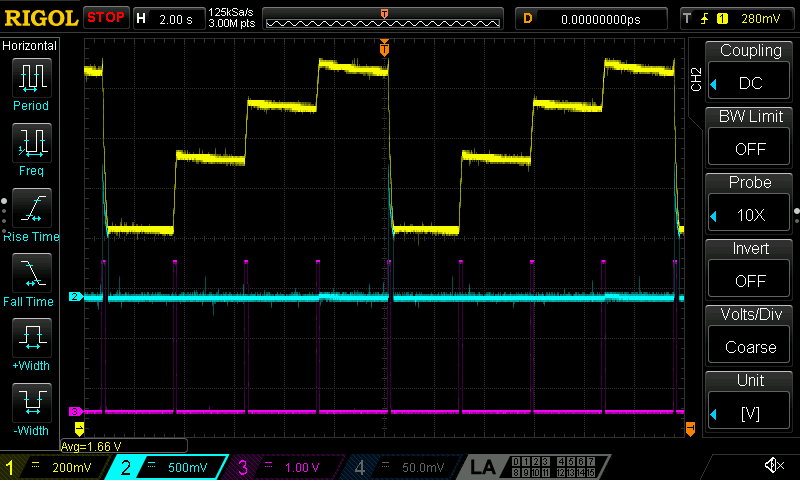
https://www.fogbeam.com/images/neuron_zero2.png