 alt Hacker News
United Airlines bans AI agents from booking flights on behalf of travelers
Comments
Tangent: it was always odd to me that "booking a [flight|hotel|concert tickets]" is the canonical example of a task that can be automated by an agent. These are tasks that are:
- already streamlined (spend 2min on Google flights, seatgeek, etc...); we aren't stuck with early web UX and latency
- I want to have 100% control of the outcome or would have to write a long list of preferences and rules (middle seats, layovers, etc...) to feel good about trusting automation
- require making a large payment. the agent is not getting free reign to use my cc
- give me some personal satisfaction and enjoyment - its delightful to look foward to a trip, concert, etc... and planning is part of the fun and anticipation imo
Somebody once said, that airline booking pages itself are one of the most sophisticated CAPTCHAs. No idea if this is true, but they obviously don't want their customers to easily find the best deals.
I guess the best option is, to use a good reseller/travel agency that provides an API/MCP for booking and managing flights.
For finding the cheapest deals agents can still be used. Just the booking itself is probably better done manually. It also eliminates the risk that the agent does something stupid.
edit: they might try to block agents, but this won't be possible with browser use. they can always throttle users by IP or fingerprint. Letting an agent book a flight might be risky, because they might cancel a booking or impose a fee if they somehow detect it.
The airlines are trying to reduce prices for everyone without giving specific people (atleast those who they don't deem "worthy") an edge. Here's a great, short comment: https://news.ycombinator.com/item?id=50459444
It's mostly a commodity, specially for economy class where price matters.
After gas and grocery, its the most vicious, cut throat business where a customer will switch from United to Delta over $5. Unlike gas and grocery they cannot compete on volume (even a 747 has a fixed capacity per leg).
It sounds counterproductive but personal AI agents cause a local optima while overall increasing cost for rest of the travelers.
For example, if you had an MCP connector to United and found a flight from SFO to DEN for $50, the rest of the seats have to go up in price to compensate and not just by a few cents because the nominal cost of an economy seat is likely $250, not $50.
Now United isn't against offering a $50 flight to customers who they deem "worth it" - they just don't want it to be anyone who can run an MCP connector. They are just betting that the "worth it" will "make it up" in the long run vs. a customer who's just there for the $50 seat.
What happens if you say "screw it, I'll code my own custom MCP connector to United.com!"
Well, eventually they will try and block you and then those $50 flights will just be gone from the website.
I have found these agentic blocks sort of inspiring and in the spirit of a free market. Amazon blocked my Muse, so I told Muse to find other vendors and prefer the shopify store for the brand. That was a pain for me to search through but AI has no problem.
Anyone here sticking up for the airlines just because you hate AI, ya'll are out of your minds.
The airlines use every nasty practice they can to raise costs to you. Hidden fees, raising costs by just viewing flights and all kinds of other crap.
Let them burn.
I recently bought a Flight directly on United.com. I usually book business travel directly on Brex so I was appalled of how bad the checkout flow was on the United site. 5 page loads. Multiple “offers” to sift through. Donations to the environment. Upgrades for security priority, seats, classes. Credit card ads.
It made me think, an agent would be nice. Too bad.
> "United is saying they don't want to add yet another, and potentially even more powerful, intermediary than they already face in terms of Google search, price-comparison metasearch sites and online travel agencies," he told CBS News. "Flight searches cost airlines money, and undoubtedly United wants to avoid the expense associated with the surge of AI bot flight searches."
How much can it cost? And if it's so expensive, wouldn't intermediaries who cache results actually be cheaper?
Their suit against Skiplagged should tell you everything you need to know about their attitude.
I see a lot of arguments about the merits, but to me the real question is whether this is sincere, or an ambit claim to get a cut of business from the companies pushing AI agents. It would be an obvious classic play to cut off access on spurious grounds and then let it back in for a slice of the action, on the pretext that the money is paying for some kind of additional assurance on the airline end.
I use a screen reader to access the web. In future, I can easily imagine an agentic screen reader as being incredibly useful.
I do not look forward to when rules like this run up against a11y concerns. The AI equivalent of the Domino's case will certainly be interesting!
These companies need to be bound by some sort of equal treatment.
If they can forbid us to use AI to interact with them, their customers should be able to opt out of being handled by their AIs as well.
Tit-for-tat.
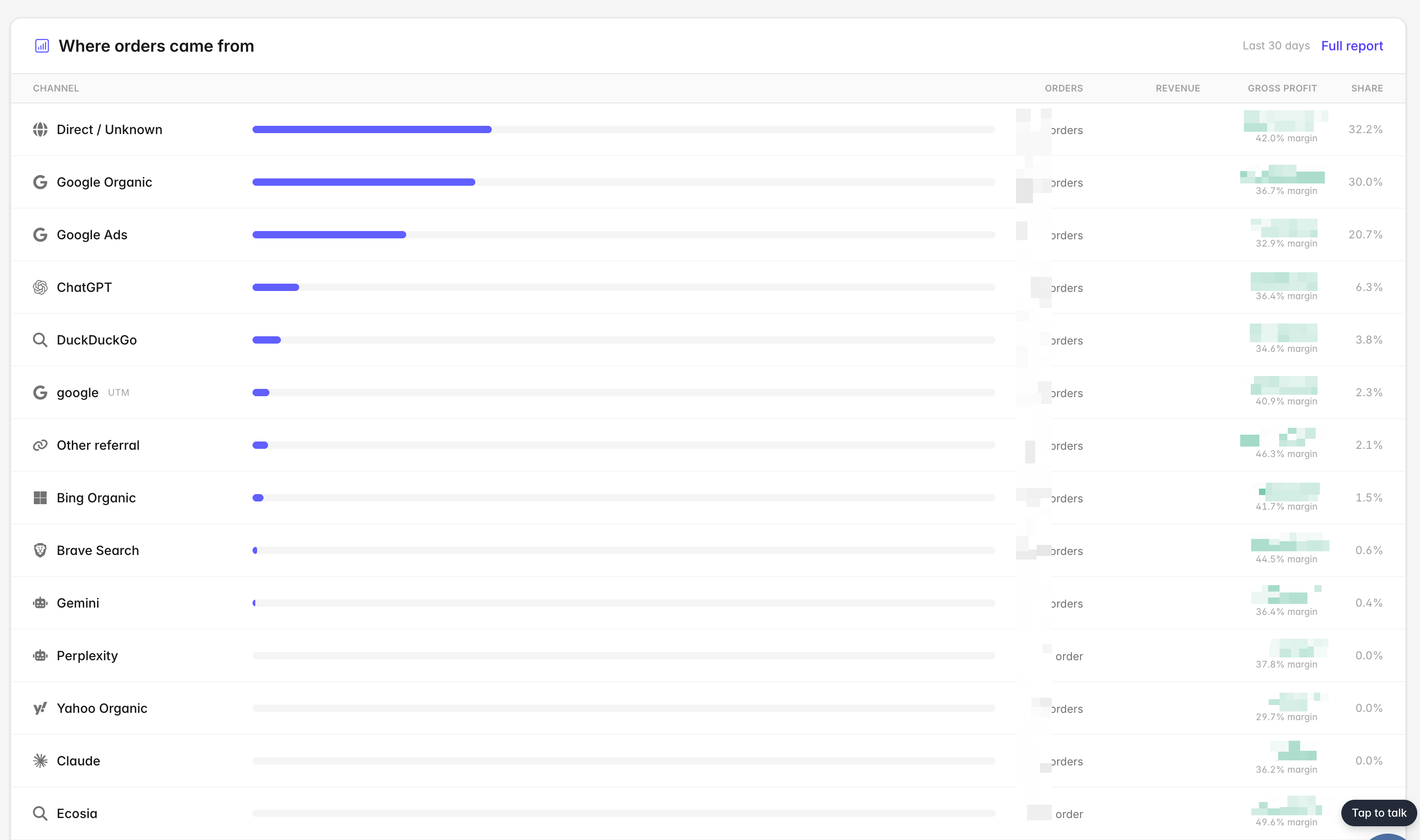
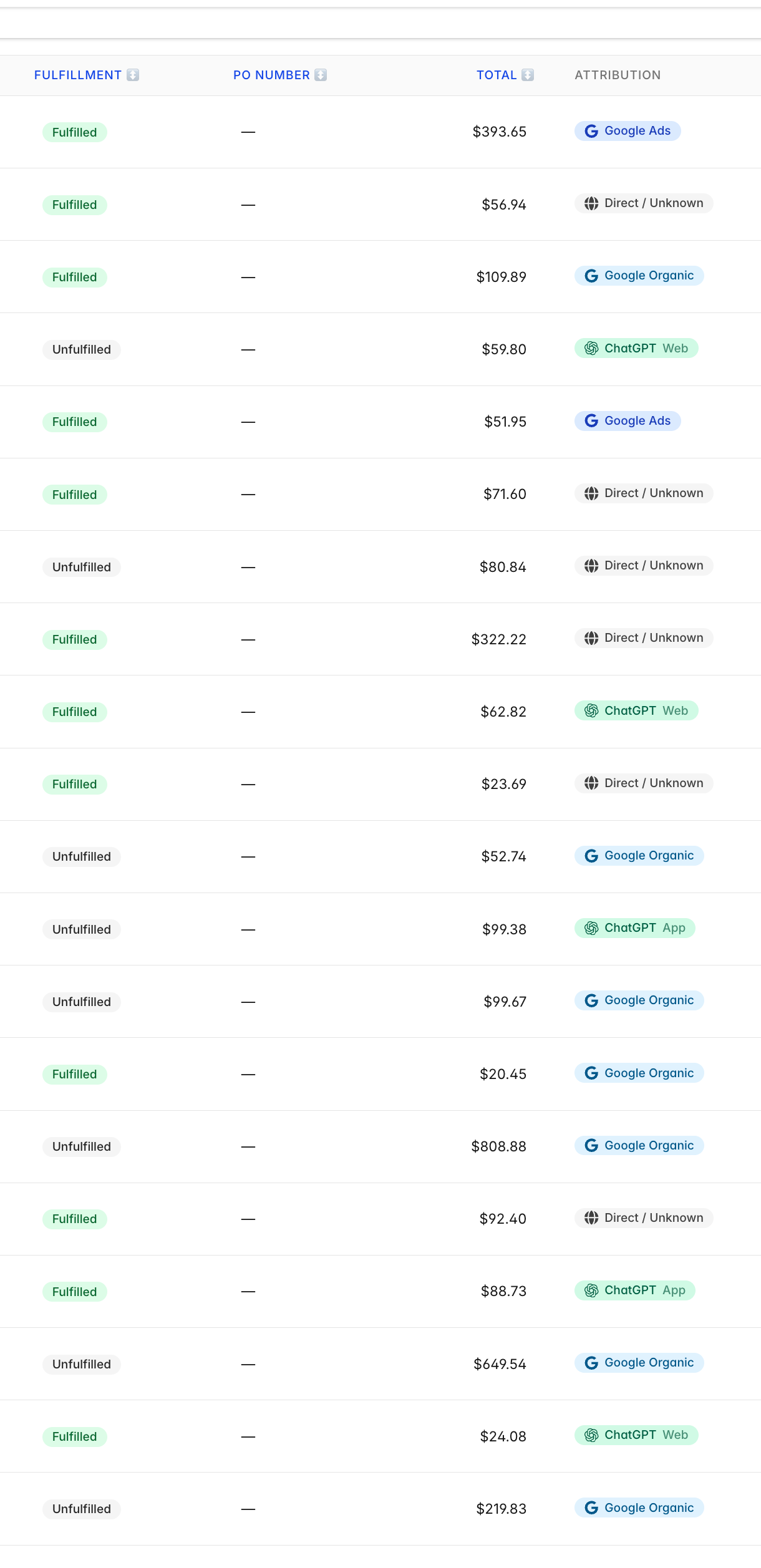
I understand why they might be tempted to do this customer hostile action. For our own business, ChatGPT’s sales have grown to be 6.3%[1] of total, but our basket size is smaller compared to other channels.
I think this is because people are purchasing only what they need as recommended by their AI and nothing extra. This is a better outcome for the customer.
OpenAI is really eating Google's lunch hard[2]!
> The carrier also said that using an AI agent to, for example, check in for a flight could violate federal regulations, including rules requiring travelers to verify in person that their luggage does not contain banned substances.
That’s ridiculous.
They just want to keep their price list miserable to compare so they can overcharge people.
If prices drop on United, you can rebook and pocket the extra money as travel credit (as long as you don't book BE). This is typically considered an underpriced option as most travelers don't regularly check prices after they've booked. AI agents threaten to reduce this "laziness tax", and it is something that other industries are worried about too. There's lots of speculation that mortgage rates will have to increase if people use AI agents to start optimally refinancing their mortgages. Seems like United will have to change this policy, fight the bots, and/or raise prices to compensate.
Actual article without ads: https://www.united.com/en/us/newsroom/announcements/cision-1...
How many people really want an AI agent to book their flights? I like AI and travel a lot, but I don't see that as being an ideal agentic tasks. In most cases, I prefer using google flights or expedia and looking at the options in a UI that is tailored to the task. Of course AI can be useful if you want to inquire about certain details or find more information.
It's funny how many AI tool demos have used flight booking as an example task. I always groan at that. I just don't think that will be the way most people book flights. Maybe the 1%ers or less. Are you you currently doing this?
I have previously made a similar comment to this, but just to reiterate and expand it: the wave of “let agents automate everything” has a whiff of “let’s automate everything by plugging it into IFTTT.” In the end most companies pulled out of IFTTT because it ate into engagement and people actually using the platforms. If I automate posting to Instagram through an API, Meta is missing out on revenue from ads not being shown to me.
I predict the same thing happening with AI agents. The direct analogy here is United is missing out on revenue by being unable to trick me into paying to choose my seats or whatever. Luckily, it will be a harder for the platforms to cut off agents but they will try.
I'm kinda suspicious of the stated motives. while plausible, has it happened very much? The cynic in me thinks this is to prevent agents hunting and findingthe best deals, and avoiding all the patterns used to squeeze more money from the buyer, like dangling attractive offers, not so obvious navigation and other tricks etc..
I wonder what pushed them to do it? Did something serious go wrong with some cases of agents booking flights, or is it more motivated from a fear of Big Tech AI gaming the dynamic pricing system that they control and potentially making them lose profits because the Agents will get much more optimal/cheap flights than mere mortals?
Not sure how they can detect an agent driving a regular browser, I have built Cupertino to more efficiently let Claude drive my mac (https://cupertino.mgcrea.io) and it can drive a regular Safari exactly like I would.
United Airlines is the horrible company. Treated me badly when I wanted a refund. They initial said yes and then tried to change their minds. I hope they burn in hell.
It's interesting. First banks, now airlines.
What are airlines they really afraid of? That people get an advantage by comparing prices?
And for banks, for years US banks have managed to keep data internally, only exposing it through Plaid, and thus getting paid for it. API like the PSD2 in Europe allow me to connect my software to pull in the transactions for free. In the US you have to hand over money to say Monarch.
Maybe there’s a world where established companies license access only to their “preferred” agent. Not great for customers but more income and less headache for the company.
Was able to Muse to call the airline on 3 different occasions recently to resolve bulkhead request and service animal requests. Was very impressed.
If they make me wait in a phone tree for hours, they should be able to talk to my AI to resolve some issues.
Airline frequent flyer programs have always been full of exploitable loopholes that most people weren't aware of, but AI can take advantage of them.
There must be another reason - not only “it’s not safe”
Usually they are for selling more tickets
So the question is : what are they not telling us ??
As much as I hate where the world is headed with AI, I can't deny how useful it is to have an agent navigate multi-step forms while recognizing all the tactics these websites use to upsell their garbage or trick you into accepting awful terms.
> sharing account credentials with [...] AI assistants can expose sensitive information
That kind of argument in bad faith is enough to tell they blocked it because it's detrimental to them and adventageous to customers.
Most people think these are dark patterns, but is not realized is that on a competitive market with multiple players you will get better prices when others pay worse.
It arguably makes it fairer. An option to trade effort => value.
If they would give the best price to everyone right away,the lowest price would be higher.
How can this be enforced?
They won't be able to block agents unless they start requiring attestation. Which I doubt is going to happen considering Google, Meta, OpenAI, etc. all want their agents to be as useful as possible.
US needs a federal law to forbid business discriminating against agents that act on behalf of their owners.
Or at least a California state law.
I already built my own AI agent browser use proxy service when Amazon was blocked. Seems like this will become a standard upgrade.
Why is anyone surprised? You would never need an agent to do this if the system was properly incentivised.
This is the future. Amazon blocked muse and outside agents, and now united is doing the same. If everyone follows this route, the concept of harness is practically dead and we will need an agent that manages specific type of agent that each company provides. What a waste of resourcez
Airline websites have sophisticated anti-bot but usestring.ai gets past it pretty easily
> "United is saying they don't want to add yet another, and potentially even more powerful, intermediary than they already face in terms of Google search, price-comparison metasearch sites and online travel agencies"
What if the airlines instead focused on delivering great service at a competitive price?
"Nah, let's escalate this arms race instead."
But it’s ok when WE do it…
https://www.msn.com/en-us/money/economy/delta-united-jetblue...
It’s an industry AI vs consumer AI arms race, and industry sure doesn’t want the consumer to win.
I enjoy my popcorn reading comments from people that build website that are designed to capture eyeballs and clicks arguing over how easy/hard it is to book travel.
I'd guess a key reason for this is because agents can't be - effectively - advertised to or upsold on anything. They should enjoy watching as bookings trend down over time. And/or agents just bypass their ban.
They really can’t. As long as you run Claude/Codex desktop or plugin, it will control your web browser session indistinguishable from your own user actions.
Unless there is some Claude AI safety concern of booking tickets.
Can't risk customers finding good deals
All their stated reasons are simply BS excuses. Come on. We all know the real reason: The airline(s) want to get their beaks wet in the deal. Either by a contract that gets them yearly guaranteed revenue for doing nothing, or by some kind of deal where the agent guys promise to steer users to one airline preferentially instead of finding the best deal (or users' other preferences).
If Meta or Claude or whoever came to an airline offering that kind of deal, they'd build an MCP in a week and solve the very simple regulatory issues - simply add a skill that shows the exact same UI of "promise you have no swords, machine guns or bombs in your luggage") to the user that the airline's own site uses.
Until that happens, they'll just ban them.
Only if they also ban them from chatting with me when there's a problem.
What on earth are they going to demo at new model releases now.
Excuse me while I tell my agent to wear a mustache.
Oh no ... how are we going to do travel booking demos now?
Ah, a point of competition!
How do they plan on stopping me from using Claude code with the Claude in chrome plugin, or some other computer use agent?
At this point it feels like I have an adversarial relationship with many merchants I use online. I wish the simple “you have a product, I have money” relationship was possible. I don’t want to take part in your giant human behavior optimization problem. You have a product and I have money why does it have to be more complicated than that?
Realistically though I know that’s not happening. I will continue to access online merchants in the way I prefer and will do my best to avoid detection or blocking. At least so far Claude is happy to play along but I suspect I will need to seek out an obliterated agent in the not to distant future. (Once the corporate capture of the frontier cloud AI models is complete.)