 alt Hacker News
We stopped AI bot spam in our GitHub repo using Git's –author flag
Comments
This has a security implication which is overlooked. Contributors to a repository have higher rights, such as avoiding approval requirements for fork PR runs. GitHub warns in the docs:
> When requiring approvals only for first-time contributors (the first two settings), a user that has had any commit or pull request merged into the repository will not require approval. A malicious user could meet this requirement by getting a simple typo or other innocuous change accepted by a maintainer, either as part of a pull request they have authored or as part of another user's pull request.
PR spam is a major problems for repo that run bounties. Maybe GitHub should temporarily block accounts from raising PRs if like 95%+ of them are getting rejected.
Is the solution to everything simply more catgirls [1]? Proof-of-work was, after all, about countering email spam. PR spam is but the latest in that long tradition.
This is great example of the toxic effect money has on open source. Reward people with respect and recognition instead. Weird anonymous accounts no one's ever heard of will leave, because someone (or something) who's concealing their identity gains no benefit from recognition.
This is what we get for telling everyone how amazing AI is at writing code. It started with the people selling AI and for some reason tons of independent developers, some quite well respected in our field, piled on. Facebook now laying people off and saying it's because AI is just so good adds more fuel to the fire. Now you have a bunch of people fully confident that their AI friend is pumping out amazing code and submitting it to projects that are completely overwhelmed
Sounds kind of weird that the blog post complains about `poisoning the conversation with pointless "implementation plans"` when literally they ask for that, after attaching $900 USD bounty to a very under-specified issue, and even replies with "Do you have an implementation plan in mind?" to some of the first "attempters". Sounds like they got exactly what they'd been asking for, and even before LLMs if you pulled something similar, the effects would have been similar.
My first thought after reading the blog was, let me share the blog with Claude and ask it how bots can circumvent this.
imo AI bots have significantly affected OSS and we need better qualitative measures to define success
> Should we stop giving fun test tasks to our job candidates?
Yes
> It's not a contract job— it's our optional way of saying thank you to the community.
The writing style in their onboarding doc has common AI tells (in the quote: em dashes, “it’s not A, it’s B” sentence).
I can understand that, perhaps they want to fight fire with fire or don’t have time as they already say. Still, it all feels like inadequate half measures to me.
Woudln't it be trivial to farm the stats needed to pass the bot checker's theshold?
'I will take "problems that could be easily be solved by implementing a Pfand system" for $200, Alex.'
Seriously. Just ask for a US$10 deposit for the each PR. If the PR is accepted (not even merged, just accepted as "this is a good effort"), give it back. Hell, give double the amount for good effort and you got yourself a cheap way to attract good contributors.
Best case, bots will balk at the payment. Worst case, the funds can be used to hire someone specifically for triage.
I'm not sure why gh hasn't already implemented stricter measures / filters / tools for PRs. It would cut down on spam and also help save their servers that can't handle the increased AI load!
Signed Commits from known authors would also help!
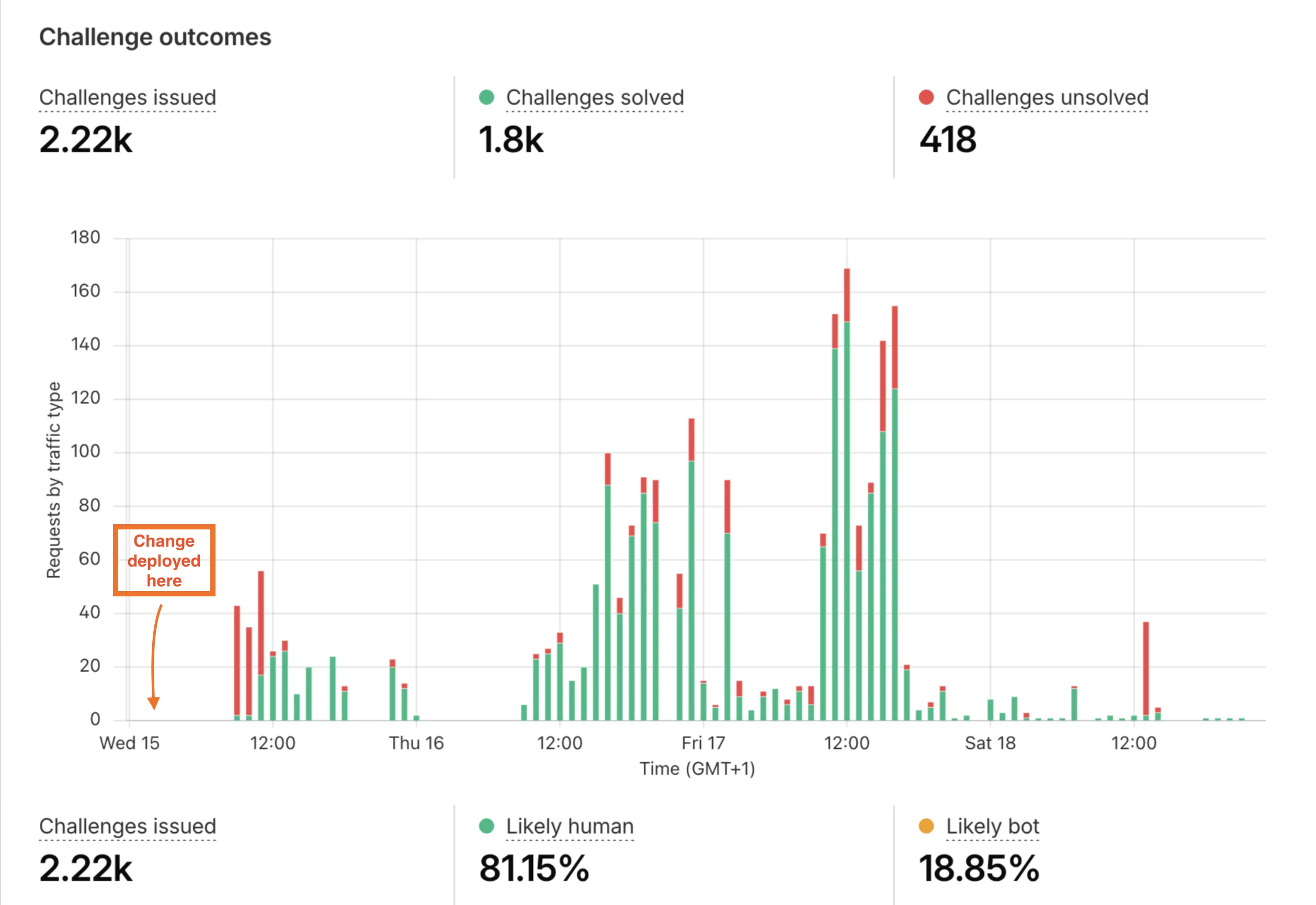
Hi HN community, I wanted to share our approach to reduce amount of AI slop PR's and issues in our repo. We enabled "require prior contribution" flag on GH and created a CI script that creates a tiny commit co-authored with you, if you pass captcha on our website. Worked really well and we were able to block at least 500 bots in the first week. Sharing a screenshot from cloudflare: https://archestra.ai/hn-comment-cloudflare-challenge-outcome...
submitting attempts — but soon...
not just this issue — but the entire repo.
contributors like @ethanwater, @developerfred, and @Geetk172 — people actively working on bounties — were getting buried.
two identity fields — author and committer — and they can be different people.
metric growth — a substantial part of
cool
I don't have a better solution, unfortunately, but it doesn't seem seem to like the spam problem has been solved. It has just been moved from pull requests to commits:
Currently, more than 10% of all commits in the archestra repo are essentially noise (369 of 3521 commits), accounting for more than half of all commits in the last month (303 of 578 commits).
But maybe (probably) the amount of such commits will go down over time, compared to the growing amounts of AI slop
so...they are manually re-setting the "interaction limits" over and over again, since they are only temporary?
why not use hooks to automatically reject issue comments / PRs etc. from users that didnt go through onboarding, rather than repurposing GH features that aren't really designed for that use (and are hence in danger of being changed someday)?
What I see is a (clever) hack, and GitHub continuing to provide good tools to its users.
That's a neat way to interface with GitHub's authentication system, but I don't see how they've solved the fundamental problem because their whitelisting process is just "click ok fine 10 times". Why won't the slop peddlers just do that too?
See, this is an article that uses dashes correctly. It adds value, creates a bit of buildup
[flagged]
[dead]
Makes me wonder if an ELO-based system would work to mitigate these issues. People who merged PR successfully onto a project, that had real issues acknowledged, the quality of their responses measured by other users reactions or something, etc, multiplied possibly by the degree of importance of the project where their activity has been made. Won't be about human vs AI, but actual helpful effective being vs low effort/spammy contributions. Issues and PRs could be sorted and filtered by their ELO score. I'm saying ELO as analogy to "score based given the context", not really a 1:1 translation of the ELO system.
Negative score would be reports from other users because of spammy content or not acknowledged issues, with a middle ground of neutral score (+-0) or little positive score to issues or whatever with clear good intention, but couldn't reach a proper merged PR or were not issues (e.g. issue existed but wasn't the correct repo to be addressed, PR was good but needed other stuff to be implemented prior to it, maybe in the long run, etc)